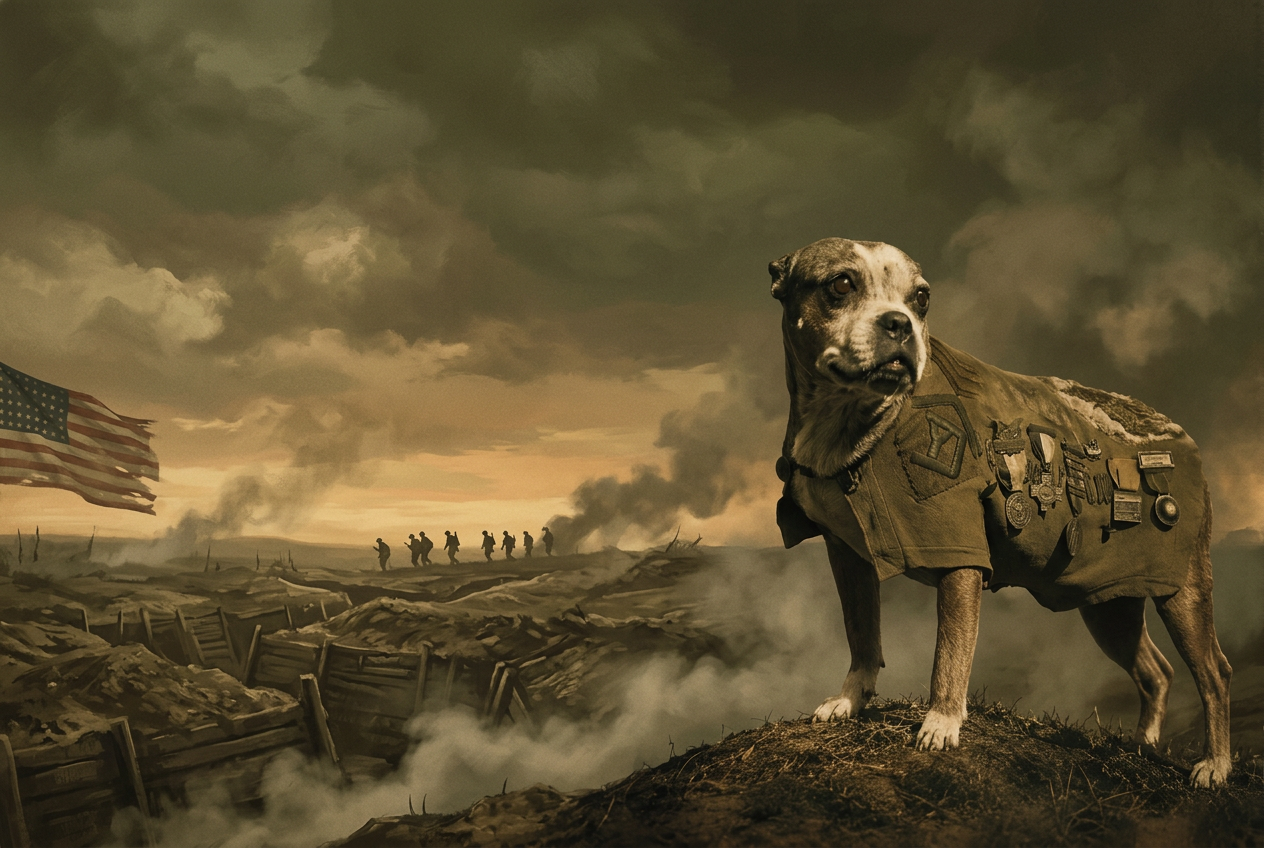

THE LITTLE SOLDIER WHO CAME HOME A LEGEND
A stray dog found his family in Connecticut. James Conroy was just 18 years old when he quickly decided to bring the little dog to the regiment. When the time came to leave for France, Stubby was already one of them.
17
Battles
1
Year + 8 Months
SGT.
Rank Earned
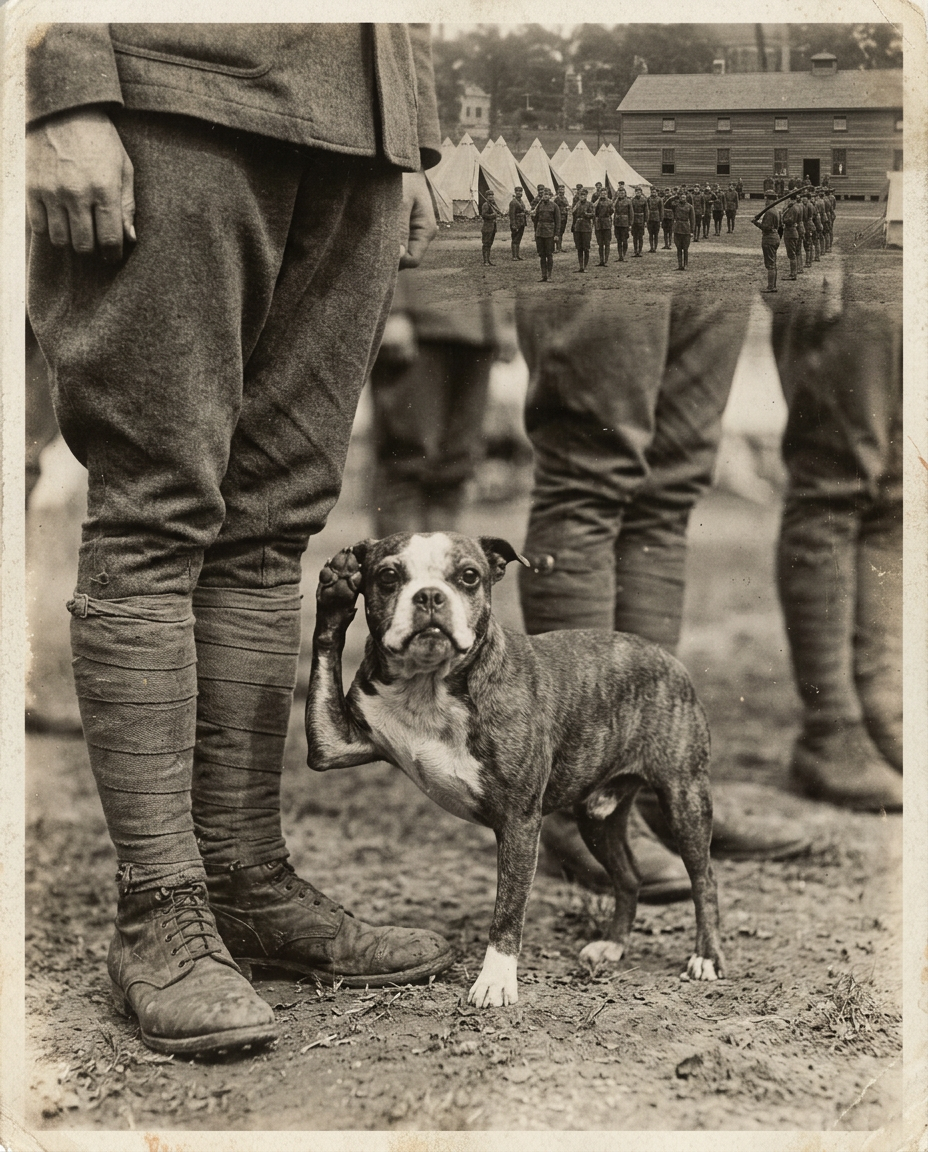
Camp Yale, New Haven — 1917
HE WALKED INTO TRAINING AND NEVER LEFT THE UNIT.
Stubby wandered onto the Yale University training field in New Haven, Connecticut in 1917. Robert Conroy took the stray terrier mix in and taught him to salute — a paw raised to the side of his head. When the 102nd Infantry shipped out to France, Stubby was smuggled aboard under a coat. Once discovered, the Commanding Officer was so taken by his salute that Stubby was permitted to stay.
He never left. He served through 17 battles across four years of the Great War, earning rank, medals and the loyalty of every man in the regiment.
A SERVICE RECORD
WRITTEN IN MUD.
THE TRAINING GROUND
Stubby found the 102nd Infantry during training. He quickly learned the bugle calls, drills, and — crucially — the salute.
THE TRENCHES
Wounded soldiers of the Ardennes found something to believe in.
THE CAPTURE
"I never saw one of the boys treat somebody of the War like."
THE RETURN
Wounded soldiers of becoming Stubby's unique uniform.
SMALL ENOUGH FOR THE TRENCHES. BRAVE ENOUGH FOR THE FRONT.
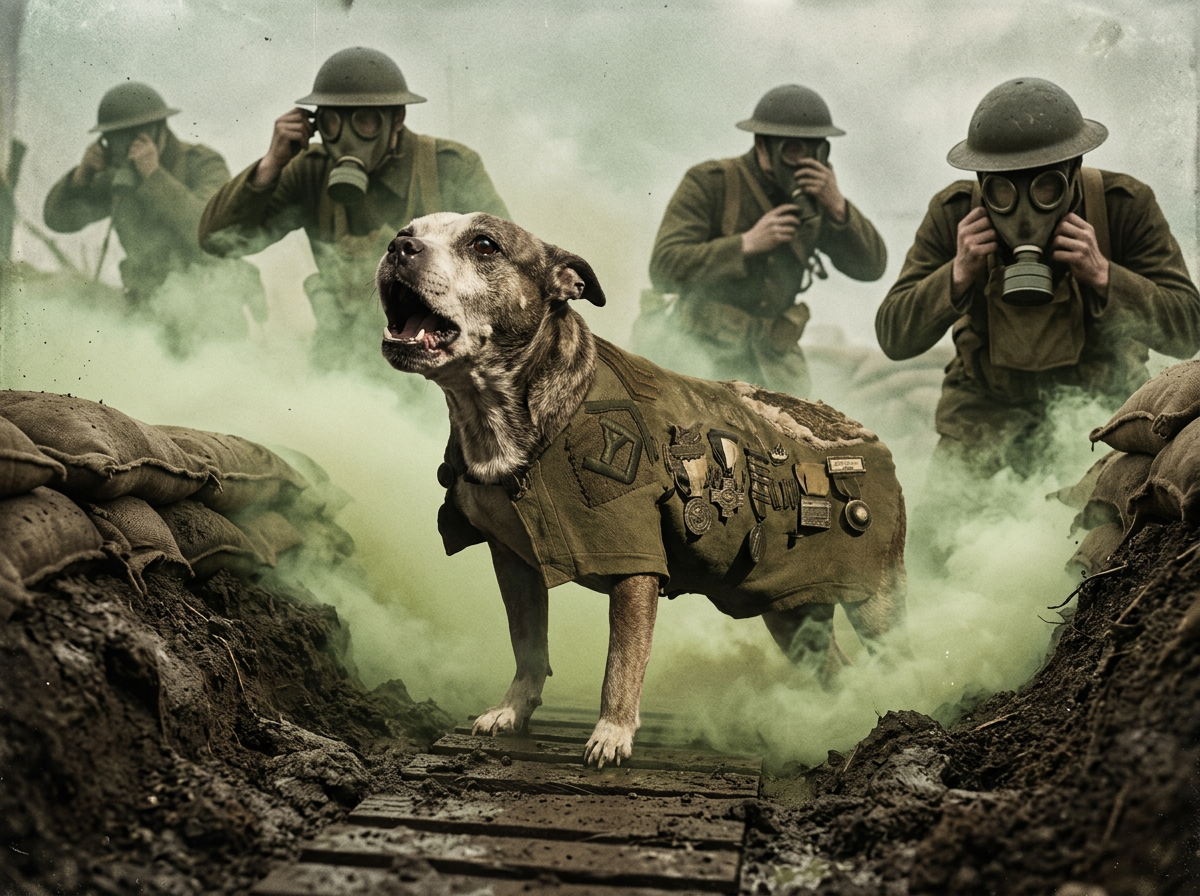
Accounts of Stubby's most incredible acts of bravery include detecting incoming gas attacks before the soldiers could smell it, warning the unit, and helping evacuate wounded men from no man's land between enemy lines.
He could hear the whine of incoming shells and lead the soldiers out of harm's way. When Stubby was wounded himself — twice — his fellow soldiers carried him to the field hospital. He was a soldier in every way that mattered. It is hard to say where hero ends and family begins.
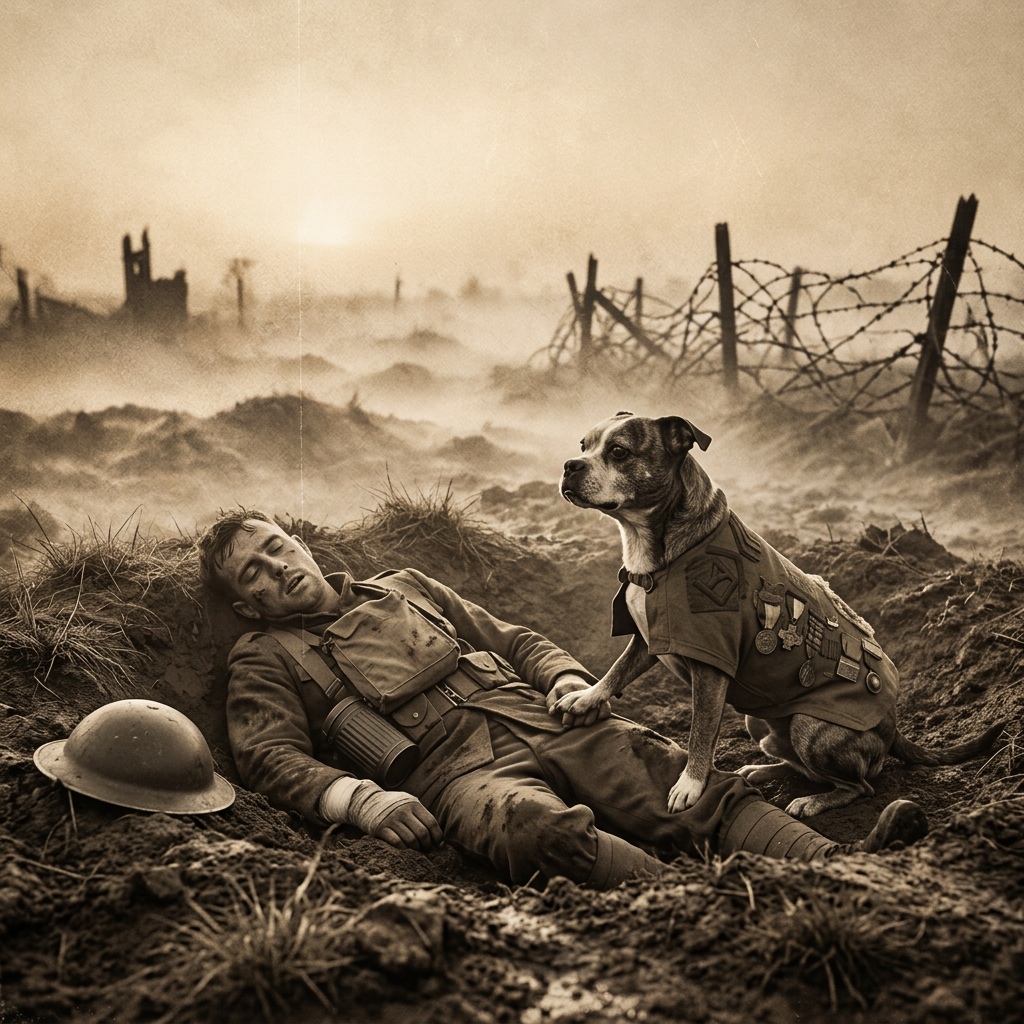
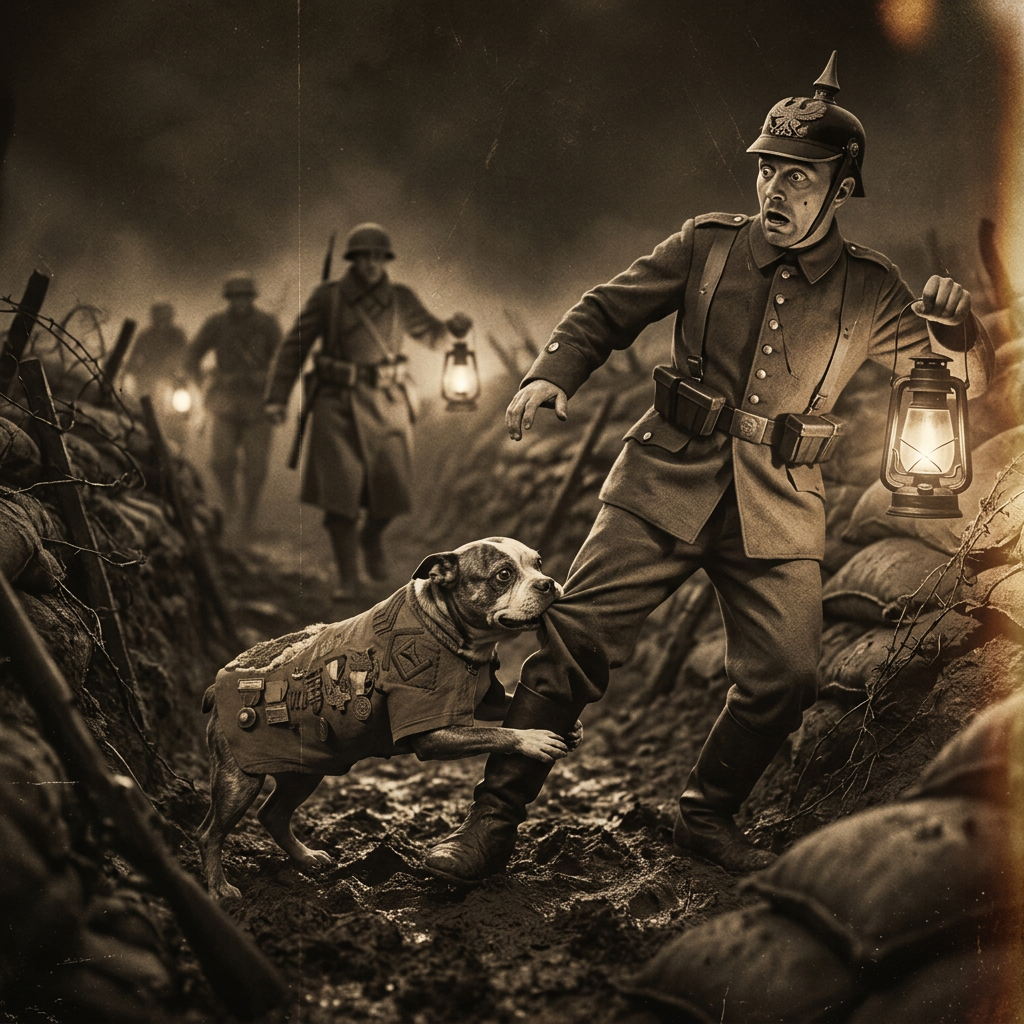
17 BATTLES · 4 OFFENSIVES · 1 CAPTURED ENEMY SPY
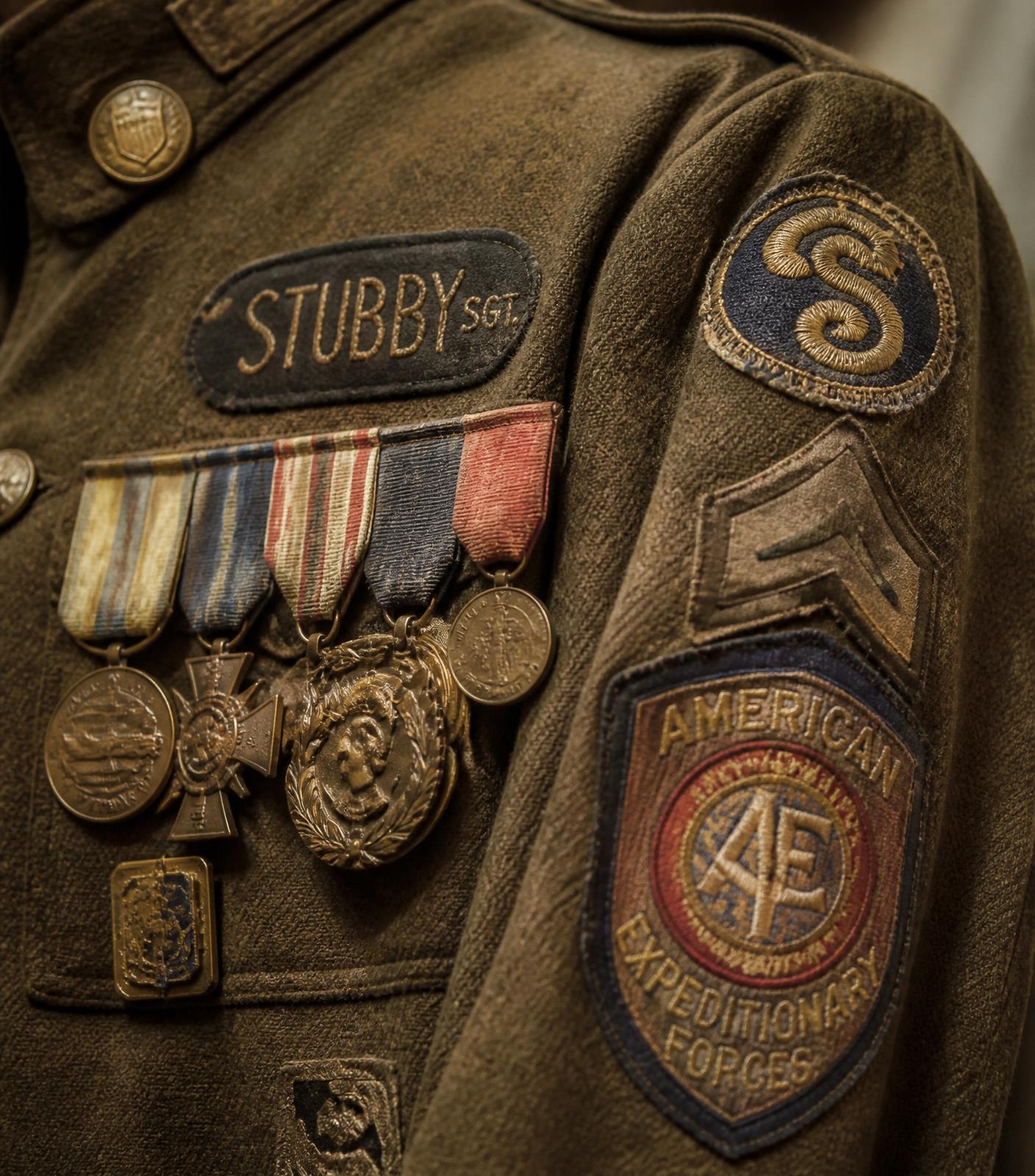
A UNIFORM BUILT FROM MEMORY.
Stubby's custom-made chamois jacket was crafted by the women of Château-Thierry, France, who adorned it as a thank-you for helping liberate their town. Every medal, every patch tells a story no commanding officer could write.
“Stubby carried the war long after the battlefield fell silent.”
- Wounded Stripe — twice
- French Medal — Château-Thierry
- 3rd Army & 1st Army Corps
- Republic of France Grande War Medal
- Sergeant Stubby
FULL HISTORY · EDUCATION · FILM
THE STORY EXISTS BEYOND THE SCREEN.
More than a century after the Great War, Sergeant Stubby's story endures in classrooms, museums and libraries. The animated film based on his life has introduced a new generation to the values that defined him: courage, loyalty, and an unshakeable sense of belonging.
The Smithsonian Institution holds his original uniform and medals. His story is used in the primary and secondary education systems as a lens for World War I history, animal welfare, and the bond between humans and animals under extreme conditions.
EDUCATION RESOURCESTHE WAR ENDED. THE STORY KEPT MARCHING.
Sergeant Stubby returned home a hero. He marched in parades, met three presidents, and became the official mascot of Georgetown University. He died in 1926 — but his story never stopped moving forward.
Bring Stubby back to the front page. Share his story, explore the history, and teach the next generation what loyalty looks like on the battlefield.
BRING STUBBY BACK TO THE FRONT PAGE.